Sapa Travel Map: Ultimate Guide to Trekking Routes & Top Attractions (2027)
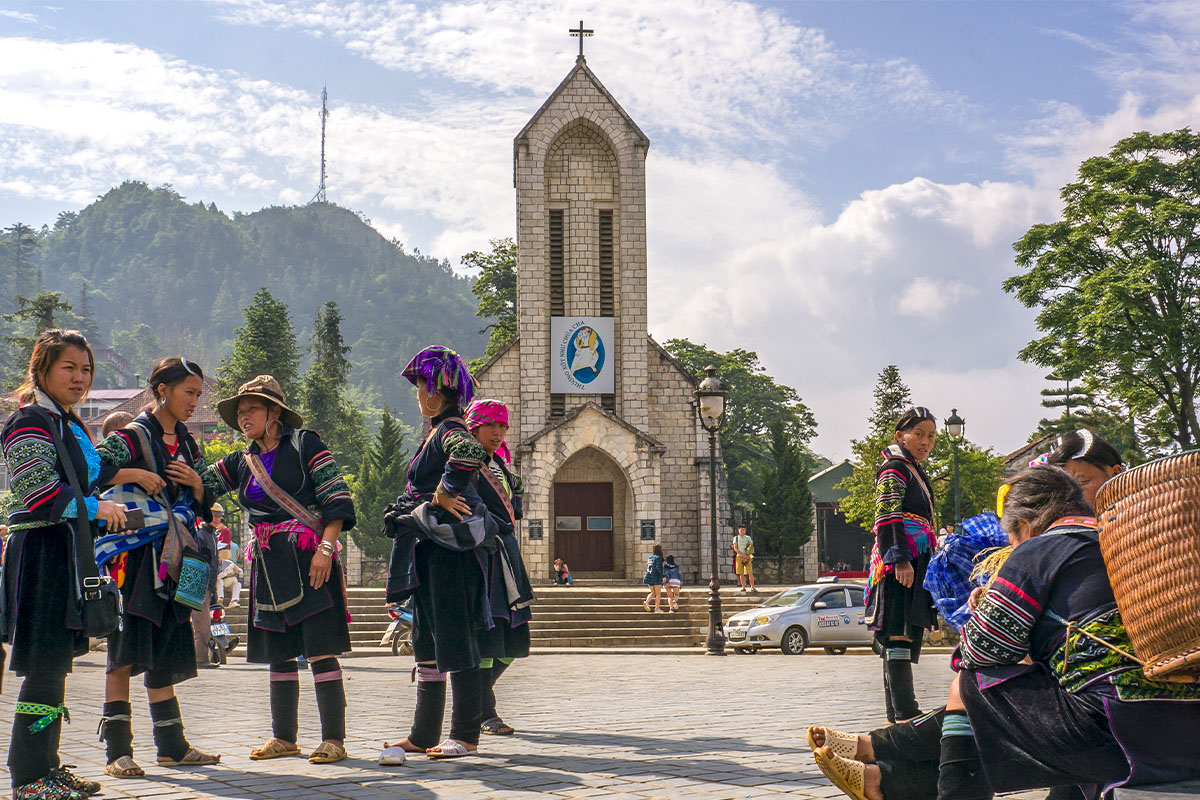
Sapa Stone Church (Notre Dame Cathedral) and the Quang Truong Square.
Make sure to visit as many of these attractions in Sapa as possible because they all offer entertainment, beauty and education at different turns.
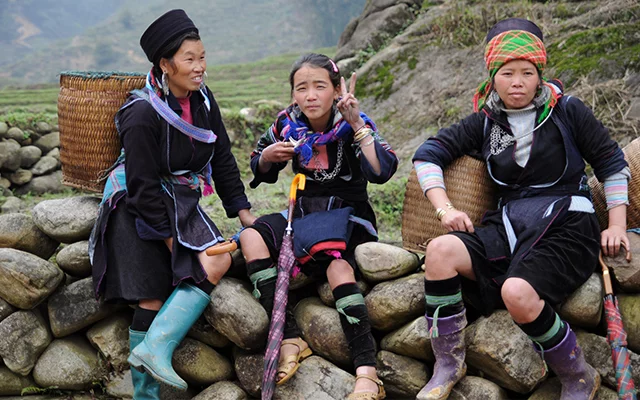
You will never be stuck for something to do in Sapa, where ancient and proudly preserved Vietnamese culture is felt most keenly by visitors, and progress wrestles with tradition in different districts of the town. The whole area of Sapa in Lao Cai has lots of trekking routes and small roads, it is not possible to mark this routes in this tourist map. In this map you will find the most visited places and routes and that is enough for basic orientation. If you want to visit another hidden or not tourist places it is good to have a local guide, we recommend a local ethnic Hmong girl, they know Sapa and area and they live there. They offer also a local homestay in the nearby villages, eg. Ta Van, Ta Phin, Thanh Kim, Lao Chai… If you want to explore nearby villages in Sapa area we recommend to rent a motorbike.
Sapa Tourist Map: Key Districts & Areas

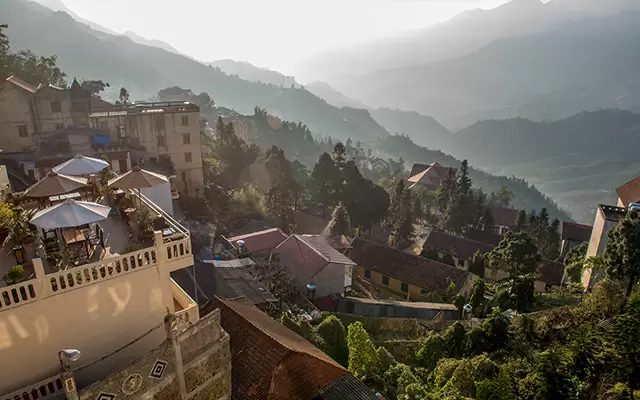
Navigating Sapa can be confusing for first-time visitors because the attractions are spread out across steep terrain. To make planning easier, it is best to visualize the Sapa travel map in three distinct zones: the bustling Town Center, the scenic Muong Hoa Valley (where the rice terraces are), and the high-altitude Fansipan & Mountain Pass area. Understanding these zones will help you book the right hotel and plan logical daily itineraries.
Sapa Town Center (Church & Lake Area)

Sapa Stone Church (Notre Dame Cathedral) and the Quang Truong Square.
The town center is the heartbeat of Sapa and serves as the primary base for most travelers. This area is compact, walkable, and packed with hotels, restaurants, and trekking shops. On the map, the town is centered around the iconic Sapa Stone Church (Notre Dame Cathedral) and the Quang Truong Square.
Key landmarks in this zone include:
- Sun Plaza (Sapa Station): The starting point for the monorail to the Fansipan Cable Car station. Its distinct yellow French-colonial architecture makes it a major photo spot.
- Sapa Lake: A peaceful spot for a morning or evening walk, located just 5-10 minutes from the church.
- Ham Rong Mountain: Accessible directly from the town center, offering panoramic views of the town and valley from above.
- Walking Street (Cau May Street): The main strip for bars, cafes, and souvenir shopping.
Traveler Tip: If you want convenience and nightlife, choose a hotel in this zone. You can easily walk to dinner after a long day of trekking.
Muong Hoa Valley (Trekking Zone)

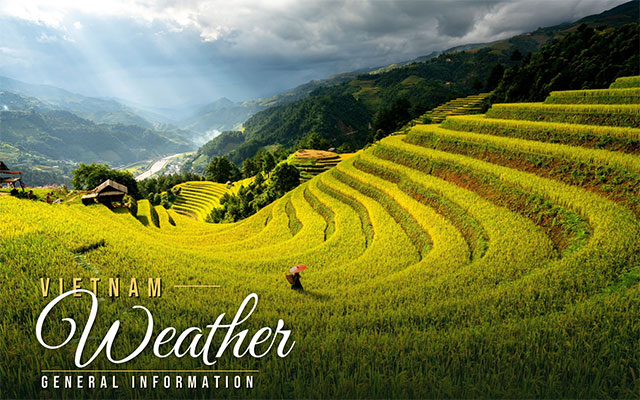
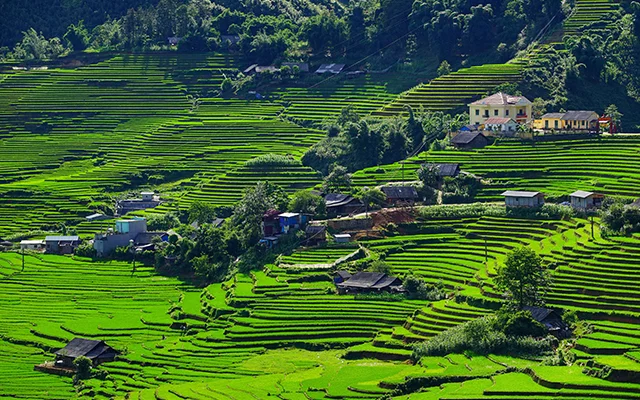
The scenic Muong Hoa Valley (where the rice terraces are)
If you are looking for the famous images of emerald rice terraces and ethnic minority villages, you need to look Southeast on the map towards Muong Hoa Valley. This is the primary trekking zone of Sapa. The route descends from Sapa town into the valley, following a winding road that offers breathtaking views.
The map of this area follows a linear route along the Muong Hoa stream:
- Cat Cat Village: Located just 2km from town (steep walking distance), famous for waterfalls and H’mong culture.
- Y Linh Ho & Lao Chai: About 6-7km from town, these villages offer more authentic, less commercialized trekking trails through massive rice paddies.
- Ta Van Village: Approximately 10km from town, this is the most popular area for homestays. It is home to the Giay ethnic minority and offers a peaceful riverside atmosphere.
Traveler Tip: For an immersive experience, skip the town hotel for one night and book a homestay here to wake up right next to the rice fields.
Fansipan & O Quy Ho Pass Area
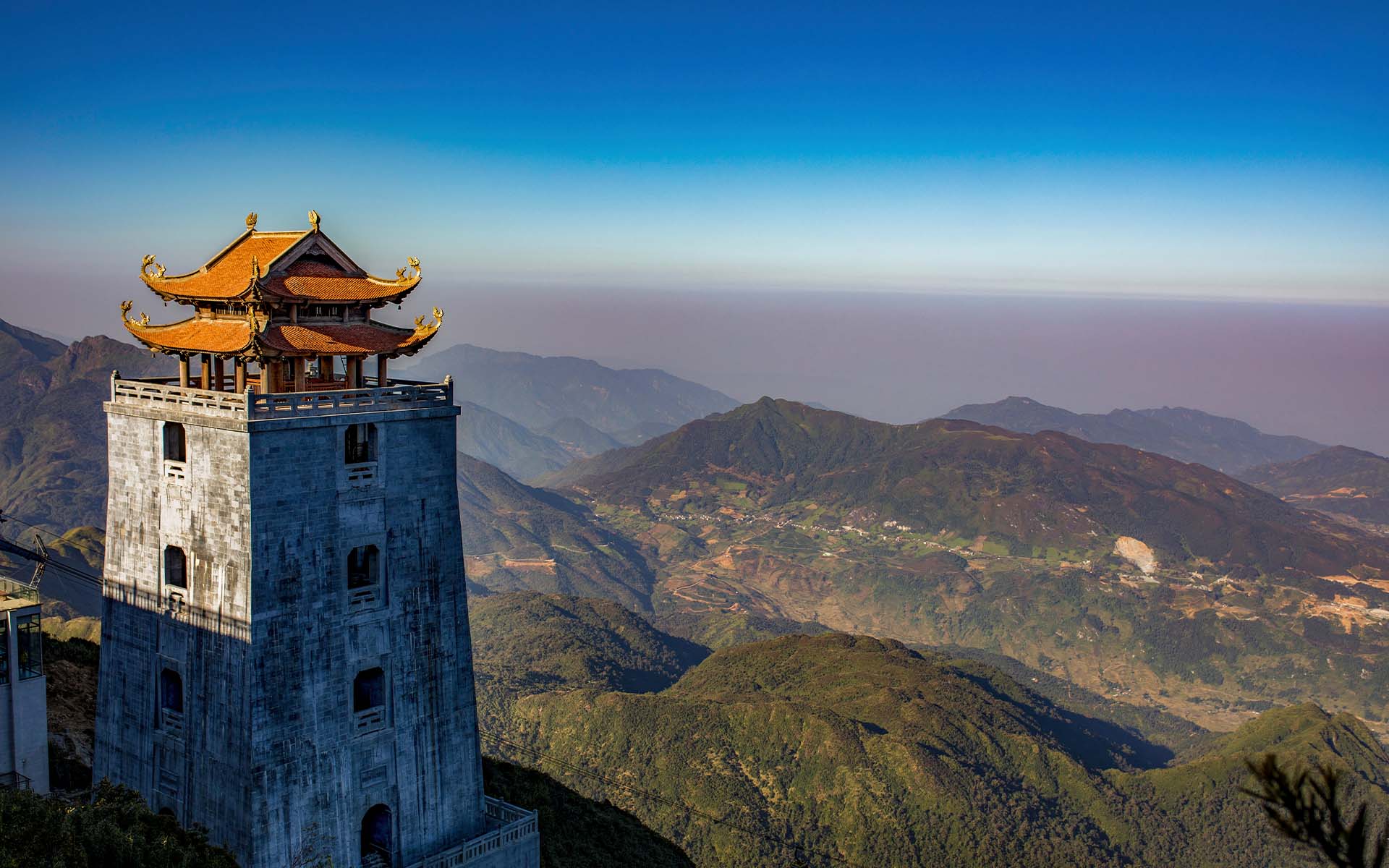
To the West and Southwest of the town lies the majestic Hoang Lien Son mountain range. This area on the map is defined by high altitudes, winding mountain roads, and dramatic scenery. It is best explored by motorbike or private car, as the attractions are further apart.
Key stops on this route include:
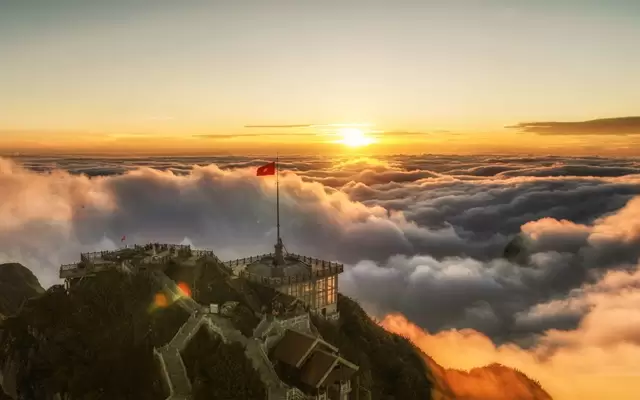
- Fansipan Legend (Cable Car Station): The gateway to the “Roof of Indochina.” You can take the cable car to the summit (3,143m) for a sea-of-clouds experience.
- Silver Waterfall (Thac Bac) & Love Waterfall: Located along the National Highway 4D, about 12-15km from town.
- O Quy Ho Pass (Heaven’s Gate): One of the four great mountain passes of Vietnam. The viewpoint here offers arguably the best sunset in Northern Vietnam.
Traveler Tip: Check the weather map before heading here. If Sapa town is foggy, the peak of Fansipan might be sunny—or vice versa. It is worth asking your hotel receptionist for a live weather update before buying cable car tickets.
Top 3 Sapa Trekking Route Maps
Sapa is often called the trekking capital of Vietnam, but without a clear map, it’s hard to know which path suits your fitness level. The trails range from leisurely village walks to strenuous mountain hikes. Below, we break down the three most popular routes you will find on any Sapa travel map, graded by difficulty.
Route 1: Cat Cat Village (Easy Walk)
- Difficulty: Easy to Moderate (Steep stairs involved)
- Distance: ~2.5 km – 4 km (Round trip or one way)
- Duration: 2 – 3 hours
This is the most accessible trekking route, located just a short distance from Sapa Town Center. The path to Cat Cat Village is not a wild trail but a paved, stepped path that descends into the valley.
The Route: Starting from the town center, you walk down Fansipan Street until you reach the ticket booth. From there, the route follows a series of stone steps down through the village of the Black H’mong people. You will pass traditional wooden houses, handicraft stalls, and indigo dyeing workshops. The trail ends at the beautiful Cat Cat Waterfall and an old French hydroelectric power station.
Map Tip: While the walk down is scenic and easy, the walk back up to town is quite steep. Most tourists choose to walk down and take a “xe om” (motorbike taxi) back up to the town center to save energy.
Route 2: Y Linh Ho – Lao Chai – Ta Van (The Classic Trek)
- Difficulty: Moderate (Uneven terrain, mud, and narrow paths)
- Distance: ~10 km – 12 km
- Duration: 4 – 6 hours (Full day)
This is the quintessential Sapa trekking experience featured on almost every Sapa tourist map. It takes you deep into the Muong Hoa Valley, offering the best views of the iconic rice terraces.
The Route: The trek usually begins by driving or walking out of town towards Y Linh Ho Village, perched on the steep slopes. From here, the trail becomes a dirt path (often muddy after rain) winding through the rice paddies. You will continue to Lao Chai Village (Black H’mong minority) for lunch, then trek further along the river to Ta Van Village (Giay minority).
Map Tip: This route can be confusing due to many small buffalo trails branching off. While you can use Google Maps, hiring a local guide is highly recommended. They know the safest paths through the paddies and provide cultural context you won’t find on any app.
Route 3: Sapa to Silver Waterfall & Love Waterfall
- Difficulty: Easy (Walking) / Moderate (Driving required)
- Distance: ~14 km driving + short hikes
- Duration: 3 – 4 hours
Unlike the valley treks, this route heads West towards the O Quy Ho Pass and requires transport (motorbike or car) to reach the trailheads. This area is famous for its dense forests and cooler, misty air.
The Route: From Sapa town, drive along National Highway 4D for about 12km to reach Silver Waterfall (Thac Bac), visible right from the road. Climb the steps to the viewing bridge for a close-up photo. Continuing another 2-3km, you reach the entrance to Love Waterfall (Thac Tinh Yeu). Here, you leave your vehicle and walk along a lovely, flat dirt path through a bamboo forest (about 1.5km walking) to reach the waterfall base.
Map Tip: This route is paved and perfect for a motorbike adventure. However, the road can be foggy. Combine this trip with a visit to the Heaven’s Gate viewpoint at the top of the pass for a complete half-day itinerary.
Distance Chart: Getting Around Sapa Attractions
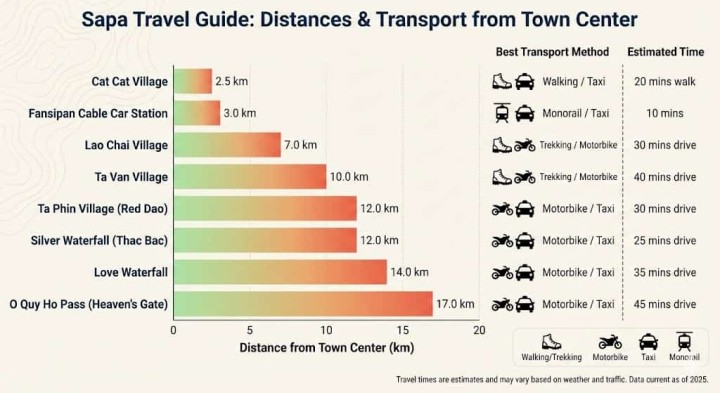
Infographic showing distances from Sapa Town Center to top attractions like Cat Cat Village, Fansipan, and Ta Van, including best transport methods and estimated travel times.
Sapa is not just a single town; it is a hub surrounded by widely scattered villages and natural sites. Many visitors underestimate the travel times because mountain roads are winding and often foggy. The chart below outlines the approximate distances from Sapa Town Center (Stone Church) to the most popular tourist spots on your Sapa travel map. Note that travel time can double during bad weather or peak traffic hours.
| Destination | Distance from Town Center | Best Transport Method | Estimated Time |
| Cat Cat Village | 2.5 km | Walking / Taxi | 20 mins walk |
| Fansipan Cable Car Station | 3.0 km | Monorail / Taxi | 10 mins |
| Lao Chai Village | 7.0 km | Trekking / Motorbike | 30 mins drive |
| Ta Van Village | 10.0 km | Trekking / Motorbike | 40 mins drive |
| Silver Waterfall (Thac Bac) | 12.0 km | Motorbike / Taxi | 25 mins drive |
| Love Waterfall | 14.0 km | Motorbike / Taxi | 35 mins drive |
| O Quy Ho Pass (Heaven’s Gate) | 17.0 km | Motorbike / Taxi | 45 mins drive |
| Ta Phin Village (Red Dao) | 12.0 km | Motorbike / Taxi | 30 mins drive |
Transport Tip: Taxis in Sapa run on meters, but for longer trips (like Silver Waterfall), it is cheaper to negotiate a fixed round-trip price with the driver beforehand.
Top 11 Things To Do & Must See Attractions in Sapa
Planning your Sapa itinerary can be overwhelming given the sheer beauty of the region. To help you prioritize, we have selected the top 11 attractions that define the Sapa experience. From the misty peaks of the “Roof of Indochina” to the vibrant culture of the local markets, these are the best places to visit in Sapa for every type of traveler.
Ham Rong Mountain
Located right behind the Sapa stone church, Ham Rong Mountain (Dragon Jaw Mountain) is one of the most accessible and rewarding eco-tourism sites in town. Unlike strenuous multi-day treks, this park offers a well-paved climb through lush orchid gardens, peculiar rock formations, and peaceful walking paths. It is widely considered one of the top things to do in Sapa for those who want spectacular views without leaving the town center.
- Highlights & Activities: The climb leads you through the colorful Orchid Garden 1 and 2, showcasing rare indigenous flowers. The ultimate reward is the “San May” (Cloud Yard) at the summit, where you get a 360-degree panoramic view of Sapa town, the Muong Hoa Valley, and Mount Fansipan looming in the distance.
- Why Visit: It offers the best bird’s-eye view of Sapa town. The mountain is shaped like a dragon’s head, and climbing it feels like walking through a fairy tale garden hidden in the clouds.
- Travel Tips: The best time to visit is early morning or late afternoon to catch the sunrise or sunset. The hike takes about 1.5 to 2 hours round trip. Wear comfortable walking shoes as there are many stone steps.
Sapa Stone Church (Notre Dame Cathedral)
The Sapa Stone Church, built by the French in 1895, stands as the most iconic historical landmark in the heart of the town. Located in the main square, this ancient stone structure is a lasting symbol of French colonial architecture and remains a central hub for community life. It is an essential stop on any Sapa travel guide and serves as the primary orientation point for your Sapa map.
- Highlights & Activities: Visitors can admire the Roman Gothic architecture, featuring a soaring bell tower and distinct stone walls. The square in front of the church (Quang Truong Square) is always buzzing with activity, from local children playing traditional games to vendors selling grilled handicrafts.
- Why Visit: It is the cultural heartbeat of Sapa. In the evenings, specifically on weekends, the church glows under spotlights, creating a nostalgic and romantic atmosphere perfect for photography.
- Travel Tips: The church is free to visit and is best viewed in the evening when the town lights up. It is also the central meeting point for most tours and treks starting from Sapa town.
Sapa Love Market
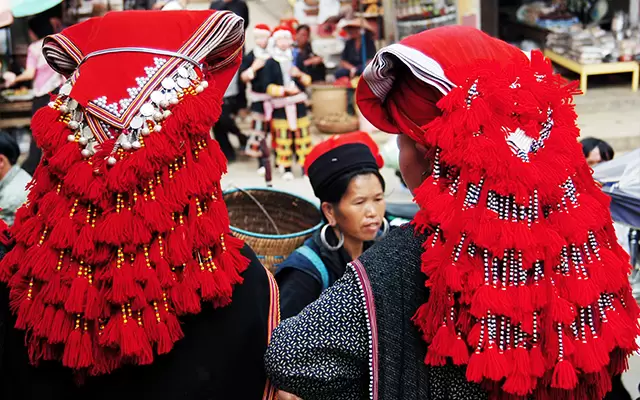
The Sapa Love Market is a legendary cultural tradition of the H’mong and Dao ethnic people. Historically, this was a place where young people from remote villages would meet on Saturday nights to court one another through song, dance, and the sound of the leaf-horn. Today, it remains one of the most intriguing Sapa attractions for those interested in local customs.
- Highlights & Activities: While the authentic matchmaking aspect has faded, the Saturday night gathering at the main square is still vibrant. You can watch traditional dance performances, hear the haunting sound of the Khen (bamboo flute), and see locals dressed in their finest colorful brocade clothing.
- Why Visit: It provides a glimpse into the rich intangible heritage of the highland minorities. It’s a festive, lively experience that contrasts with the quiet serenity of the trekking trails.
- Travel Tips: The Love Market takes place every Saturday evening in the square in front of the Stone Church. Be respectful when taking photos; asking permission is always appreciated. Be aware that modern versions are more performance-oriented for tourists than the secret courtships of the past.
Sapa Lake
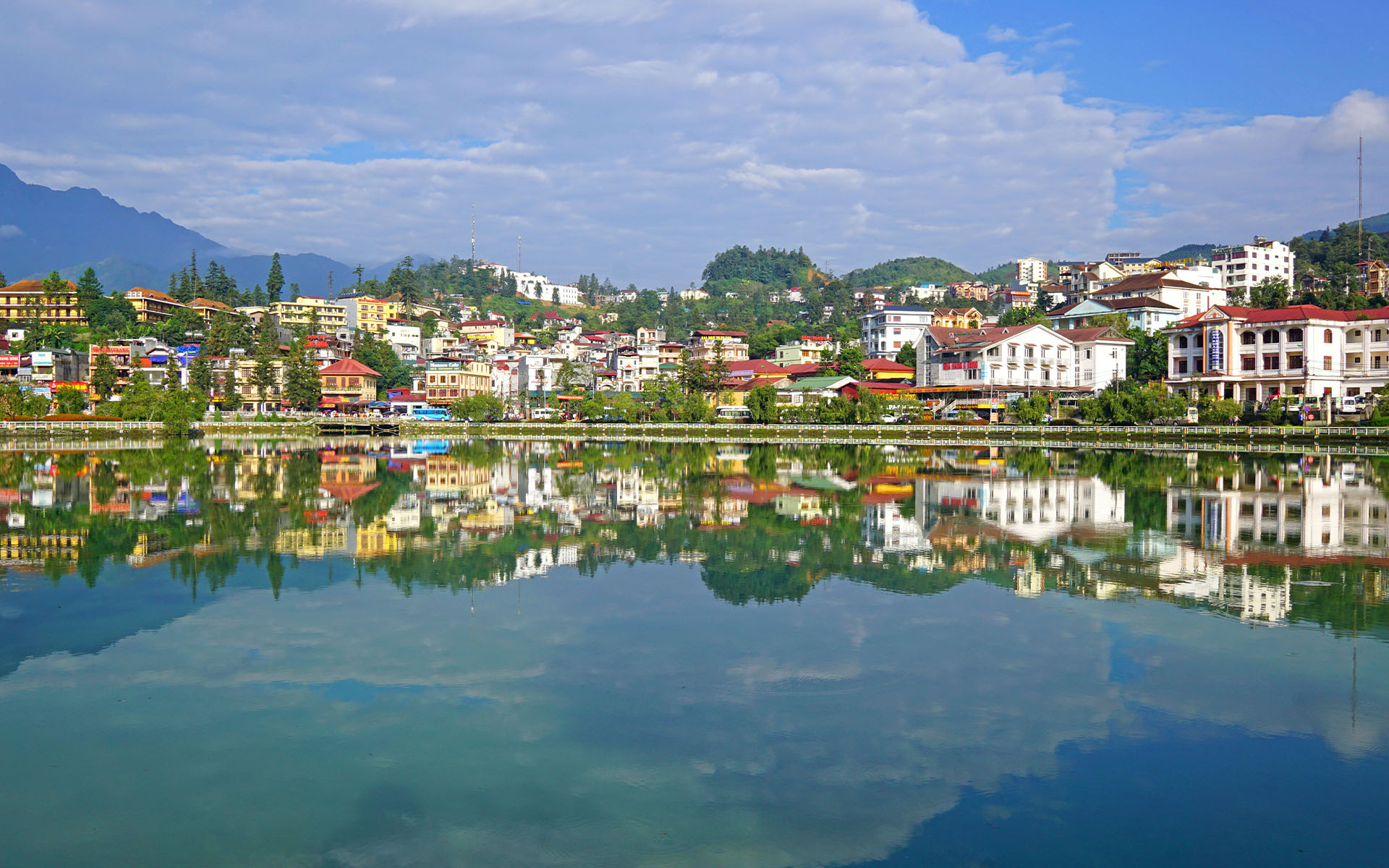
Sapa Lake is a serene, man-made freshwater lake located just a 5-minute walk from the church. Surrounded by rows of trees, colonial-style villas, and charming cafes, it offers a peaceful escape from the busy market streets. For many travelers, a leisurely walk around the lake is one of the most relaxing things to do in Sapa to unwind after a long day of hiking.
- Highlights & Activities: The lake is perfect for a morning jog or a slow evening stroll. You can rent swan paddle boats to float on the water or simply sit at a lakeside café to enjoy a Vietnamese coffee while watching the reflection of the clouds on the water’s surface.
- Why Visit: It is the scenic focal point of the town center. The lake reflects the changing moods of Sapa’s weather—misty and mysterious in the morning, and glittering with town lights at night.
- Travel Tips: Visit in the early morning to see the mist rolling over the water. It is centrally located, making it an easy addition to any itinerary without needing transport.
Hoang Lien National Park
Covering a massive area of the Hoang Lien Son mountain range, Hoang Lien National Park is a biodiversity hotspot and a paradise for nature lovers. It is home to Vietnam’s highest peak, Fansipan, and protects thousands of species of flora and fauna, including rare orchids and ancient trees. This is the wilder side of Sapa, essential for any adventure-focused Sapa travel map.
- Highlights & Activities: The park is the prime destination for deep jungle trekking and eco-tours. Visitors can explore rugged trails, spot wildlife, and immerse themselves in the raw, untouched nature of Northern Vietnam. It connects several ethnic minority communes and offers challenging routes for serious hikers.
- Why Visit: It is recognized as an ASEAN Heritage Park. If you want to go off the beaten path and breathe the freshest mountain air, this is the place. The biodiversity here is unique to the sub-temperate climate of the region.
- Travel Tips: You will need to purchase an entrance ticket to enter the park area. Because the terrain is rugged and the weather unpredictable, hiring a local guide is highly recommended for safety and navigation.
Cat Cat Village
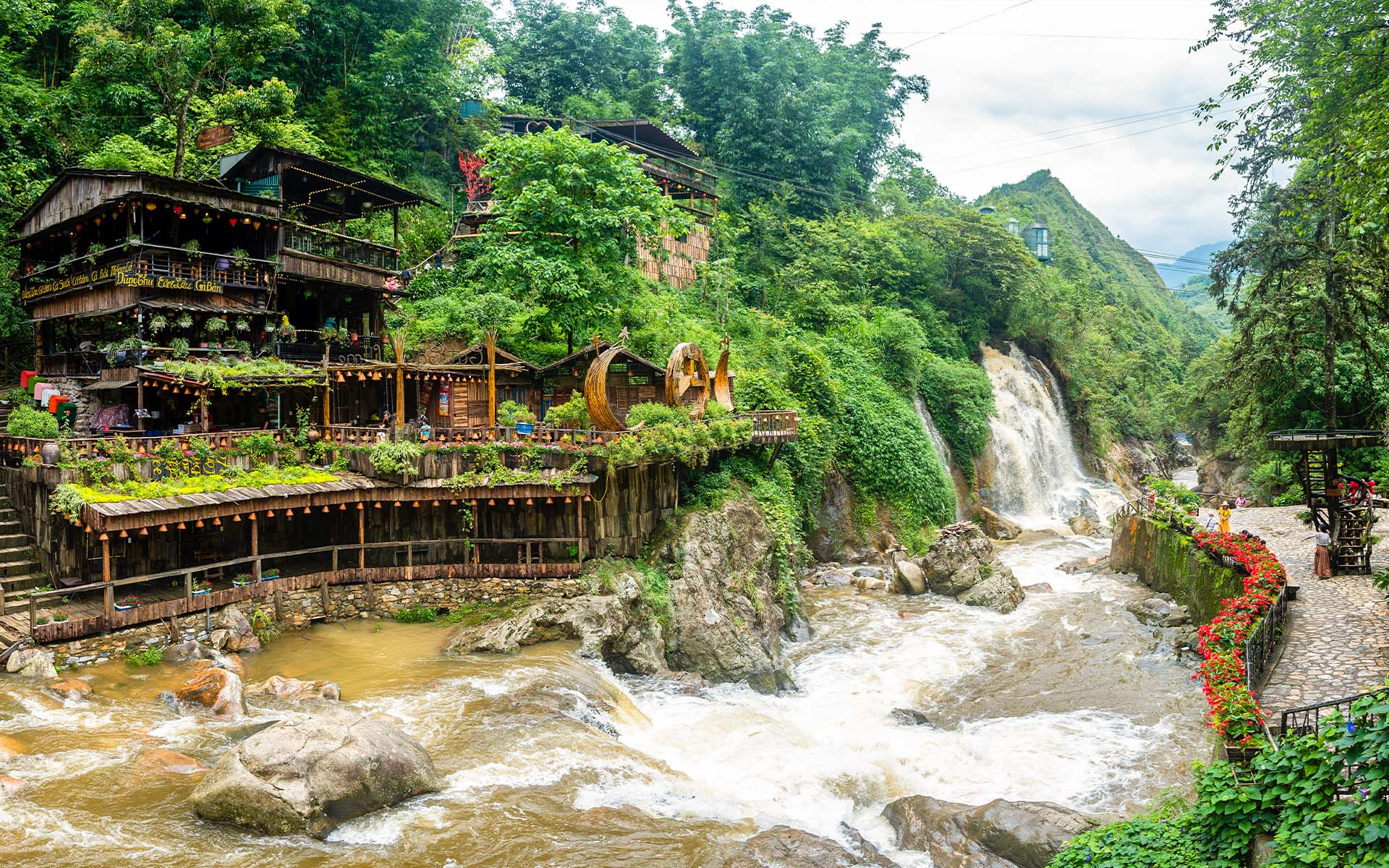
Nestled at the bottom of the Muong Hoa Valley, just 2km from Sapa town, Cat Cat Village is the most famous village of the Black H’mong people. It acts as an open-air museum of H’mong culture and is arguably the most popular stop among Sapa attractions for first-time visitors.
- Highlights & Activities: The walk down to the village involves descending hundreds of stone steps lined with souvenir shops renting traditional costumes. Once inside, you can visit traditional H’mong houses, watch locals weave fabric and craft silver jewelry, and explore the beautiful flower gardens planted specifically for photo opportunities.
- Why Visit: It offers an accessible introduction to ethnic minority culture without requiring a difficult trek. The combination of cultural exhibits and natural scenery makes it a favorite for photographers.
- Travel Tips: The trek down is easy, but the walk back up is steep. Most visitors walk down and take a “xe om” (motorbike taxi) back up to town. The best time to visit is mid-morning when the sun clears the mist.
Cat Cat Waterfall (Tien Sa Waterfall)
Located centrally within Cat Cat Village, the Cat Cat Waterfall creates a dramatic focal point where three streams converge. Historically, the French utilized this powerful flow to build one of the first hydroelectric power stations in the region, the ruins of which can still be seen today.
- Highlights & Activities: The waterfall is the rewarding finale of the walk through Cat Cat Village. Visitors can rest on the rocks, enjoy cultural dance performances at the nearby community house, and take photos of the white water cascading over the giant boulders. The sound of the rushing water provides a soothing backdrop to the village atmosphere.
- Why Visit: It is one of the few waterfalls in Sapa that you can easily reach on foot from the town center. The mix of rushing nature and the historical French architecture nearby adds a unique layer to the visit.
- Travel Tips: Be careful on the wet rocks near the stream as they can be slippery. There is a bamboo bridge crossing the stream that offers the best angle for photographs.
Muong Hoa Valley
The Muong Hoa Valley is the crown jewel of Sapa’s landscape. Home to the world-famous terraced rice fields that cascade down the mountainsides like a giant staircase, this valley is where you will find the most breathtaking scenery in Vietnam. It contains several villages, including Lao Chai, Ta Van, and Hau Thao, making it the heart of Sapa travel guide itineraries.
- Highlights & Activities: The primary activity here is trekking. Whether you choose a gentle walk or a multi-day hike, you will be surrounded by endless green (or golden) rice paddies and the imposing Hoang Lien Son range. Photography here is world-class, especially during the harvest season.
- Why Visit: This is the image of Sapa you see on postcards. The sheer scale of the engineering of the ancient stone and earth terraces is awe-inspiring. It is also the best place to experience authentic homestays with local families.
- Travel Tips: The best time to visit is September to October (golden harvest) or April to May (watering season). To explore the valley, you can trek, rent a motorbike, or take the funicular train from Sapa town to the Fansipan station, which offers an aerial view of the valley.
Silk Path Grand Resort & Spa
While Sapa has many hotels, the Silk Path Grand Resort & Spa is often listed as an attraction in itself due to its magnificent architecture and landscaping. Perched on its own hill, it resembles a classic French citadel and is famous for its extensive rose gardens, earning it the nickname “The Muse of Indochina.”
- Highlights & Activities: Even if you aren’t staying here, the resort is famous for its ancient rose collection and hydrangea gardens. Visitors often come for afternoon tea or a meal at the restaurant to enjoy the luxury setting and the stunning views overlooking the Hoang Lien Son mountain range.
- Why Visit: It represents the height of luxury in Sapa. The resort blends French colonial elegance with local ethnic decorative motifs, offering a perfect example of the region’s unique architectural fusion.
- Travel Tips: The resort offers buggy services for guests. If you are not a guest, checking in for a coffee or a meal is a great way to enjoy the grounds and take photos with the blooming rose gardens, especially in spring.
Fansipan Cable Car (Sun World Fansipan Legend)
Conquering the “Roof of Indochina” used to require a distinct 2-day trek, but the Fansipan Cable Car has made the 3,143-meter peak accessible to everyone. This engineering marvel holds the Guinness World Record for the longest non-stop three-rope cable car and is undeniably one of the best places to visit in Sapa for thrill-seekers and sightseers alike.
- Highlights & Activities: The 15-minute ride floats above the clouds, offering unmatched views of the Muong Hoa Valley below. At the summit, explore the spiritual complex featuring giant Buddha statues, pagodas, and the celestial gate. The final ascent to the peak monument can be done via stairs or a funicular train.
- Why Visit: Standing at the highest point in Vietnam, Laos, and Cambodia is a bucket-list experience. The sensation of being above the clouds is magical, and the spiritual architecture at the top adds a serene, holy atmosphere.
- Travel Tips: Weather is key. Check the live camera at the station or ask your hotel before buying tickets, as the peak can be completely foggy even if the town is sunny. Bring a warm jacket; it is much colder at the top.
New Sapa Market
For a taste of local commerce, visit the New Sapa Market, located about 1.5km from the town center near the bus station. Unlike the tourist-centric shops in the center, this is a functioning market where locals shop for daily goods, fresh produce, and traditional medicines.
- Highlights & Activities: Wander through stalls piled high with fresh vegetables, medicinal herbs, and dried goods. The upper floor is dedicated to fabrics, where you can buy raw brocade materials, ethnic costumes, and handicrafts at prices often lower than in the boutiques near the church.
- Why Visit: It offers an unfiltered look at daily life in Sapa. It is less polished than the center, giving you a chance to see the variety of agricultural products grown in the region and practice your bargaining skills.
- Travel Tips: The market is open daily, but it is busiest and most colorful on weekends. If you are looking to buy souvenirs like brocade bags or scarves, this is a great place to bargain for a good deal. Be sure to check the quality of the fabric carefully.
Best Time to Use a Sapa Map for Rice Harvest
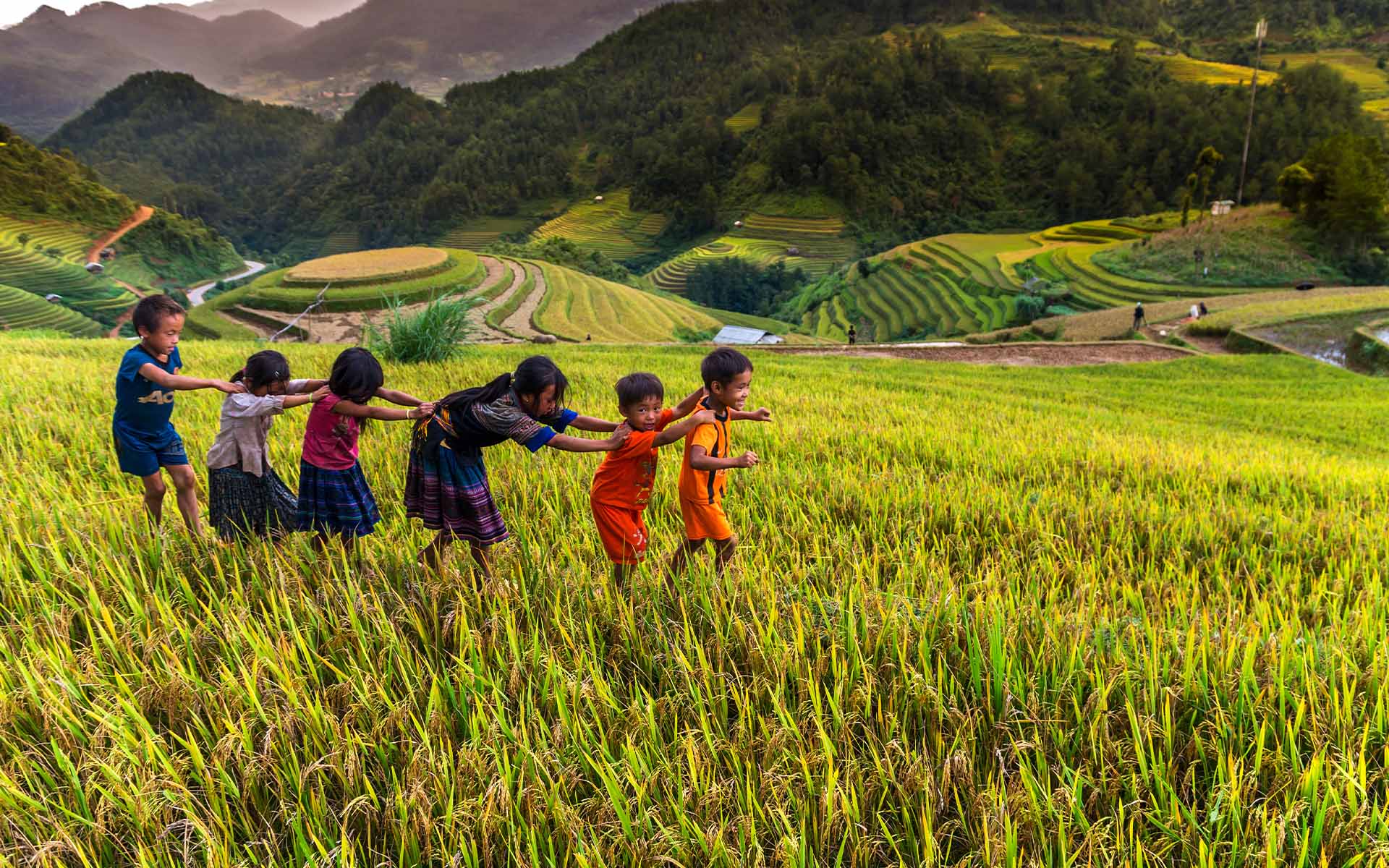
Using a Sapa travel map is most rewarding when the landscape is at its peak beauty. The appearance of the rice terraces changes drastically depending on the season, so timing your trip is crucial for photography and trekking.
The Golden Season (Harvest Time)
- When: Late August to Early October
- What to expect: This is the absolute best time to visit. The endless terraces turn a vibrant, golden yellow as the rice ripens. The weather is generally cool and dry, making it perfect for using your trekking map to explore Muong Hoa Valley.
- Best Spots: Lao Chai, Ta Van, and scenic viewpoints along the road to Ban Ho.
The Watering Season (Pouring Water)
- When: Late April to May
- What to expect: Farmers flood the fields to prepare for planting. The terraces act like giant mirrors reflecting the sky and clouds. It is a unique, artistic time for photographers.
- Best Spots: Y Linh Ho and the higher slopes where water cascades down.
The Green Season
- When: June to Early August
- What to expect: The rice is growing, and the entire valley is covered in a lush, deep green carpet. Be aware that July and August can be rainy, which might make dirt trails on your map slippery and harder to navigate.
Exploring Sapa is an adventure that stays with you long after you leave the mountains. Whether you are tracing a trekking route on a map through the Muong Hoa Valley, hunting for waterfalls near O Quy Ho Pass, or standing amidst the clouds on Ham Rong Mountain, having the right plan is essential.
While a Sapa travel map is a great tool for orientation, the terrain here can be tricky, and the weather changes fast. To truly experience the magic of the rice terraces and ethnic culture without the stress of logistics, let a local expert guide your way.
At VietnamTravel.com, we specialize in crafting seamless journeys that take you beyond the standard tourist trails. Don’t just look at the map—live the adventure.
? Plan Your Sapa Adventure With Us:
- Explore Our Packages: Browse our most popular itineraries, from light walking tours to intensive trekking adventures. ? View All Vietnam Tours
- Design Your Own Map: Have a specific route in mind? Tell us your travel style, and we will build a private trip just for you. ? Customize Your Sapa Tour
- Need Advice? Not sure which season is best or which village to stay in? Our local travel consultants are here to help. ? Contact Us for Free Advice
Related Posts
Our Recommendations